
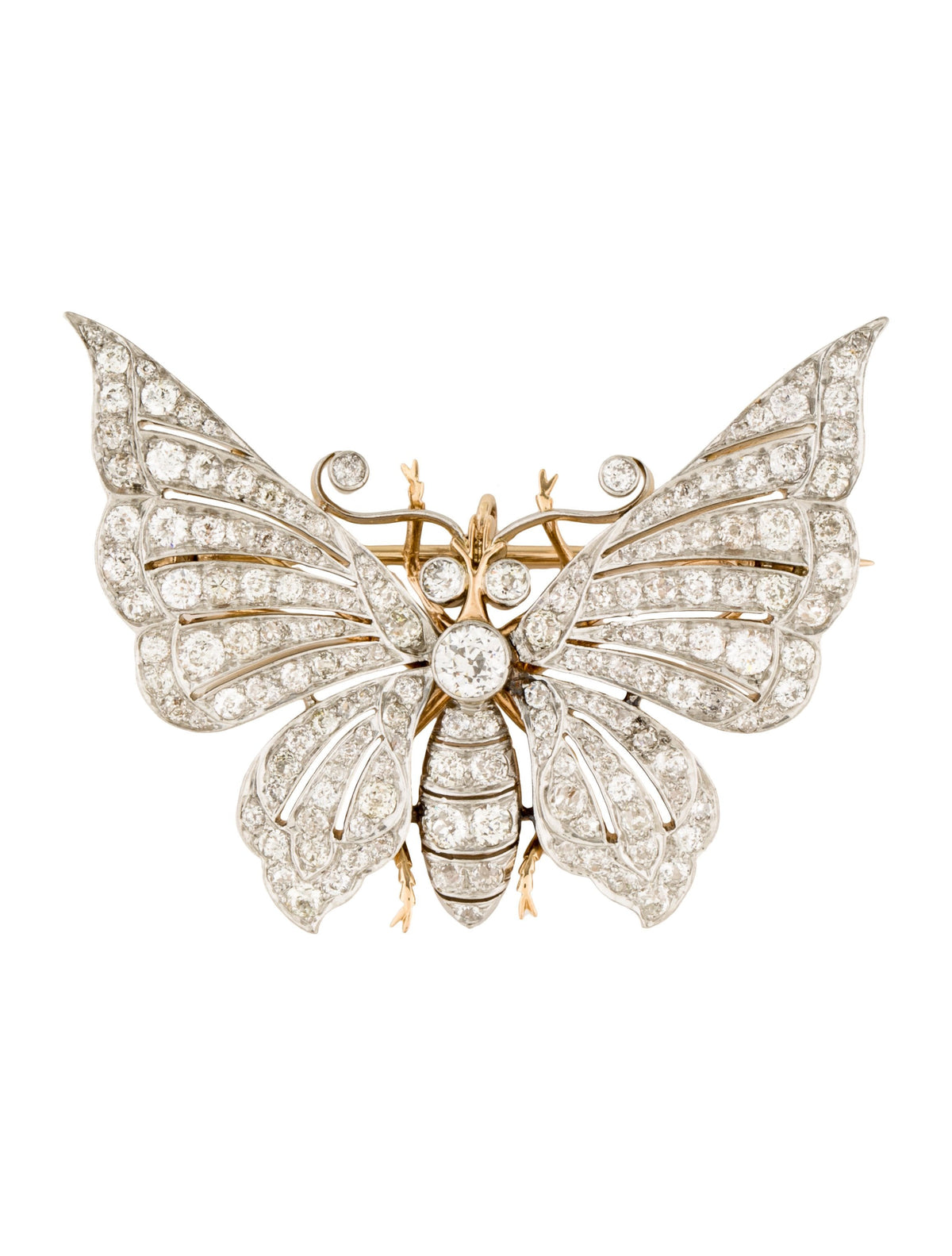
 A jewel can announce itself before a word is spoken. Yet the details that make a piece truly collectible are often quieter: a maker’s mark beneath the clasp, an original fitted case, a photograph from a prior collection, or a record connecting the jewel to a distinguished house. Jewelry provenance is the history that turns an exceptional object into a more legible, more personal, and often more compelling one.
For collectors, provenance is not decoration around the purchase. It is part of the jewel’s identity. A striking gold and gemstone bracelet may be beautiful on its own; a signed bracelet with a documented place in a noted private collection carries a different kind of authority. The distinction matters when assessing rarity, authorship, condition, and long-term desirability.
What Jewelry Provenance Actually Means
Jewelry provenance is the documented ownership and history of a piece over time. It may establish who made it, when it was created, where it was sold, who owned it, and how it has been preserved. The strongest provenance is supported by tangible evidence rather than an appealing but unverified story.
Documentation can take many forms: original receipts, period invoices, insurance schedules, auction catalogs, exhibition records, correspondence from a jewelry house, photographs, appraisals, or paperwork from a recognized estate. Original presentation boxes, signed pouches, and certificates can add context, though they do not independently prove that a jewel has remained with its original contents.
A maker’s signature is related to provenance, but it is not the same thing. A Cartier signature identifies a house. Provenance may reveal that the particular Cartier jewel appeared in a significant sale, belonged to a known collector, or was commissioned for a specific occasion. One speaks to authorship; the other traces the life of the object.
Why Provenance Changes the Conversation
Fine jewelry is intimate by nature. It is worn close to the body, chosen to mark success, love, travel, or personal reinvention. Provenance gives that intimacy historical depth. It can explain why a design exists, clarify an unusual combination of materials, or place a jewel within a distinctive moment in design history.
Consider the difference between a period jewel attributed to an important house and a signed example accompanied by a period receipt or catalog entry. Both may be desirable. The documented piece, however, offers greater clarity. For a serious collector, clarity has value.
Provenance can also sharpen appreciation of design. A sculptural 1960s gold jewel from Bulgari reflects a very different point of view from the lyrical, nature-led compositions associated with Van Cleef & Arpels. A richly textured Buccellati creation speaks through hand-worked gold, while a Seaman Schepps jewel often carries an unmistakably bold, American ease. Documentation helps place these signatures in context rather than treating them as isolated decorative effects.
That said, provenance is not a substitute for beauty. A jewel should still have presence, proportion, craftsmanship, and condition worthy of attention. A famous former owner cannot rescue a weak design, heavily compromised workmanship, or a piece altered beyond recognition. The finest acquisitions bring together both: visual conviction and a story that holds up under close inspection.
The Evidence Collectors Notice
The most persuasive records create a coherent chain. Dates should make sense. Materials, dimensions, signatures, and stone descriptions should correspond to the jewel in hand. A 1970s invoice describing a yellow-gold, lapis, and diamond necklace is meaningful only if the necklace’s construction, measurements, and details align with that description.
Condition is part of this reading. A jewel may have been resized, re-plated, restored, or reset during its lifetime. Such work is not automatically a flaw. Jewelry was made to be worn, and sympathetic restoration can preserve a piece for future enjoyment. Still, an informed collector wants to know what is original and what has changed. A period ring with its original mounting and stones tells a different story from a ring whose center stone was later replaced.
Hallmarks and signatures deserve careful attention as well. They can identify a maker, metal standard, country of origin, or date range, but they require interpretation. Marks may be partially worn, added during later importation, or present on components that were not originally together. The most convincing assessment considers the whole jewel: its construction, style, materials, wear, and documentation.
Provenance Is Not Always Public
Some of the most important jewelry histories are necessarily private. Collectors, families, and estates may prefer discretion, particularly when a jewel has passed through generations or belonged to a prominent individual. In these cases, provenance can still be meaningful without revealing every name.
A responsible presentation might confirm that a piece comes from a private collection, a family estate, or a long-held collection while respecting confidentiality. Privacy does not diminish a jewel’s significance. What matters is whether the available information is accurate, proportionate, and honestly described.
Collectors should also be wary of overly theatrical claims. Phrases such as “once owned by royalty” or “from a celebrity estate” are enticing, but they deserve support. A credible provenance does not need exaggeration. It is precise about what is known, candid about what is not, and careful not to turn possibility into fact.
Jewelry Provenance and the Collector’s Eye
The best collections are rarely built by chasing labels alone. They are shaped by an eye for design and a respect for the layers that make a jewel singular. A signed 1940s brooch with superb movement, an architectural gold collar from the 1970s, or an exceptional pair of period earrings can each deserve a place because the piece is unmistakable in its own right.
Provenance adds dimension to that choice. It may confirm that a jewel is an especially fine example of a designer’s work, preserve the connection between a piece and its original setting, or explain a rare variation not commonly encountered. For those who wear their collection, it also offers something richer than a conversation starter. It offers a sense of continuity.
At All The Best Vintage, rare finds are selected for the details that reward a second look: exceptional design, craftsmanship, condition, and when available, the history that distinguishes one jewel from another. Questions are welcome. An informed conversation before choosing a piece is part of the pleasure of collecting.
When Less Documentation Does Not Mean Less Worth
Not every important vintage jewel arrives with a complete paper trail. Receipts are discarded, boxes are separated, and family histories can fade. A lack of extensive documentation should not automatically exclude a piece from consideration, particularly when its construction, signature, style, and condition strongly support its attribution.
The distinction is in the language used to describe it. “Signed,” “attributed to,” “circa,” and “with documented ownership history” are not interchangeable terms. Each conveys a different degree of certainty. Collectors who understand that nuance are better positioned to recognize both the security of fully documented pieces and the excitement of a beautifully made jewel whose story is still being assembled.
The most memorable jewels do more than complete an outfit. They hold their own point of view, then acquire meaning as they move from one discerning owner to the next. Provenance allows that story to remain visible, while leaving room for the next chapter to be yours.

Commenta
Questo sito è protetto da hCaptcha e applica le Norme sulla privacy e i Termini di servizio di hCaptcha.