
 A remarkable ring announces itself before its gemstone ever catches the light. The way it sits on the hand, the precision of its proportions, the quiet assurance of its setting all reveal intent. Knowing how to evaluate ring craftsmanship allows a collector to see beyond carat weight and signature, and recognize the qualities that make a jewel memorable, wearable, and worthy of a place in a serious collection.
Craftsmanship is not a single detail. It is the disciplined relationship between design, metalwork, stone setting, comfort, and time. A ring can be extravagant yet poorly resolved. Conversely, an elegantly spare jewel may reveal extraordinary skill in the smallest decisions.
How to Evaluate Ring Craftsmanship Beyond the Surface
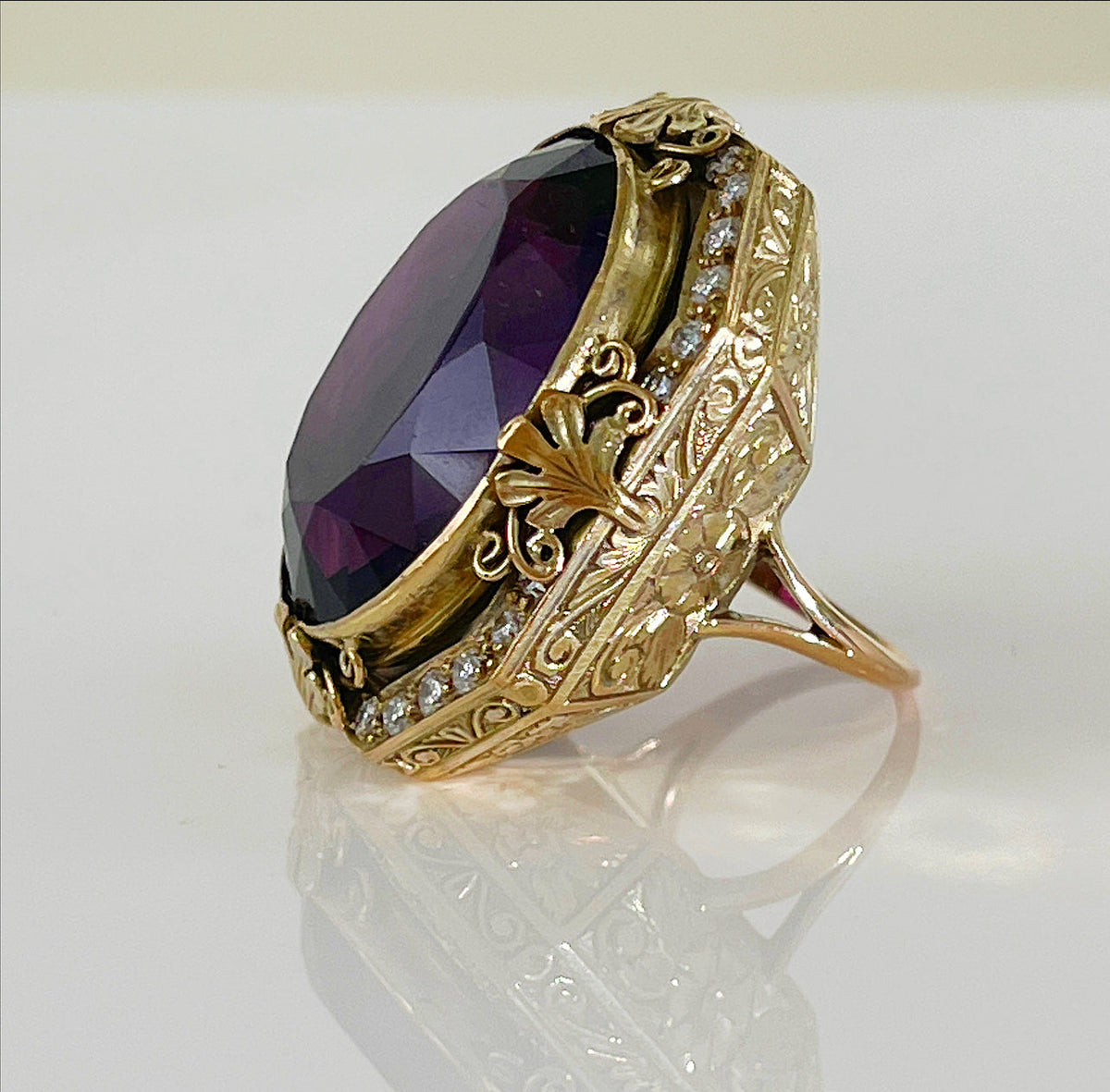
Begin with the silhouette. Viewed from above, a well-made ring has visual balance: the center stone or motif feels properly scaled to the shoulders, shank, and finger coverage. From the side, the profile should be equally considered. A high setting can be dramatic and desirable, particularly in certain mid-century designs, but it should not appear precarious or awkwardly perched.
The best jewelers understand that proportion affects both beauty and wear. A substantial mounting should have enough architectural presence to support a significant stone. Delicate details, whether millegrain edging, engraved shoulders, or openwork galleries, should be crisp rather than visually crowded. In exceptional vintage rings, the view beneath the setting is often as compelling as the face of the ring. This is where a maker’s seriousness becomes visible.
A handmade ring may carry faint evidence of the human hand, and that is not a defect. Slight variation in engraving or hand-applied texture can be part of its character. The question is whether the variations feel intentional and controlled. Uneven symmetry, careless solder seams, or a design that loses definition at close range are different matters entirely.
Examine the Setting, Not Just the Stone
A diamond, colored stone, or carved material may draw the eye, but the setting determines how securely and gracefully it lives within the ring. Look closely at the prongs, bezels, and galleries.
Prongs should be proportionate, evenly placed, and neatly finished. They should hold the stone firmly without overwhelming it. Overly heavy prongs can obscure a beautiful gemstone, while thin, worn, or mismatched prongs can signal a need for expert attention. In an older ring, a later re-tipping or restoration is not automatically a negative. Fine jewels that have been worn across generations often require responsible maintenance. What matters is whether the work respects the original design.
A bezel should trace the stone cleanly, without gaps, buckling, or a thick, clumsy rim. In finely made pieces, the bezel follows the contour of the gem with confidence. When a ring features multiple stones, examine their alignment. A carefully executed cluster, bombe, or geometric arrangement has rhythm. Stones sit at a consistent height and appear deliberately spaced rather than pressed together as an afterthought.
The gallery deserves particular attention. This openwork area beneath the center setting is both structural and decorative. In a superior ring, it allows light and cleaning access while reinforcing the setting. Pierced galleries, scrolling wirework, and finely constructed underbezel details can be hallmarks of a maker who understood that a ring should reward inspection from every angle.
Assess Metalwork at Close Range
Fine metalwork has clarity. Look for crisp edges where crispness is called for, smooth transitions where the form should flow, and clean solder joints that do not interrupt the design. The shank should meet the head of the ring naturally. A visible seam is not always cause for concern, especially in a restored vintage jewel, but it should not look crude or structurally uncertain.
Engraving is one of the clearest indicators of skill. Hand engraving has depth, variation, and a lively line that machine-made decoration rarely achieves. Floral motifs, scrollwork, geometric borders, and bright-cut details should look deliberate rather than fuzzy. Likewise, millegrain should read as a fine, regular beaded edge. Wear is expected on antique and vintage rings, but flattened or incomplete millegrain can alter the character of a design and should be considered in context.
Pay attention to polish. Highly polished platinum, gold, and silver should have a clean, even surface, but a mirror finish is not the only standard of quality. A satin finish, hand-hammered surface, or textured treatment can be equally sophisticated when it belongs to the design. The relevant question is whether the finish appears purposeful and consistent.
Look for Engineering You Can Feel
A ring is a small object with a demanding job. It must be beautiful on the hand while bearing daily movement, pressure, and occasional impact. Craftsmanship is therefore as much about engineering as ornament.
Slip the ring on, if possible, and notice the balance. Does the top-heavy setting rotate immediately? Does the shank feel too slight for the scale of the head? Do sharp edges catch on fabric or feel unpleasant against adjacent fingers? Some historic styles are naturally higher set or more delicate than contemporary designs, and that can be part of their appeal. Still, thoughtful construction should make a ring feel stable rather than fragile.
Inside the shank, the metal should be comfortably finished. A well-shaped interior has no rough seams, sharp openings, or abrupt transitions. In a wide band, subtle interior shaping can make a meaningful difference in wear. In rings with hinged elements, articulated shoulders, or complex sculptural forms, movement should feel secure and intentional, never loose or rattling.
Weight can offer useful information, although it is not a simple measure of quality. A well-made platinum ring may feel satisfyingly substantial, while a finely engineered gold jewel can be surprisingly light. Excess metal does not equal refinement. The ideal is an appropriate balance between presence, durability, and design.
Read the Evidence of Age With Intelligence
Vintage rings have lives before they reach a collection. Gentle softening of engraving, slight thinning at the base of a shank, and minor surface wear may be entirely consistent with age and honest use. These qualities can contribute to the romance and authenticity of a jewel.
What deserves closer scrutiny is damage that compromises structural integrity or distorts the original design. Look for poorly matched replacement stones, uneven re-sizing, stressed prongs, distorted bezels, or repairs that interrupt pattern work. A ring may have been altered beautifully, especially when the work was carried out by a skilled jeweler. It may also have been altered in a way that diminishes its coherence.
This distinction is especially relevant for signed and designer jewels. A maker’s signature adds historical and collector interest, but the quality of execution must still support the attribution. The finest designer rings are not defined by a name alone. Their value lies in the recognizable command of form, setting, materials, and finish that made the name significant in the first place.
Consider the Design as a Complete Statement
Collector-level craftsmanship is often felt as resolution. Nothing seems accidental. The stone, the setting, the metal color, and the ring’s profile all belong together. A bold cocktail ring may be exuberant, but its construction should remain disciplined. A restrained solitaire may appear simple, yet its proportions and finishing may reveal astonishing sophistication.
This is why rarity alone is not enough. An unusual ring can be fascinating without being especially well made. The exceptional piece is both distinctive and resolved - a jewel with presence, technical confidence, and lasting visual authority.
At All The Best Vintage, rare finds are selected with this standard in mind. The most compelling rings are not merely decorative objects. They are small works of design, often carrying the language of their period and the enduring evidence of a skilled hand.
When a ring invites you to turn it over, study its profile, and admire the work beneath the stone, give that instinct weight. The details that ask for a second look are often the details that make a jewel worth remembering.

Commenta
Questo sito è protetto da hCaptcha e applica le Norme sulla privacy e i Termini di servizio di hCaptcha.