

 A Tiffany hallmark can be smaller than a grain of rice, yet it may carry more evidentiary weight than a jewel’s most dramatic stone. Knowing how to authenticate Tiffany hallmarks means reading that small inscription as one part of a larger, highly considered object. The stamp must agree with the metal, construction, design language, age, and signature details of the piece in hand.
For collectors, this is not a matter of finding one reassuring word. Authentic Tiffany & Co. jewels have a coherence - the kind that comes from exacting manufacture, a defined design vocabulary, and decades of documented authorship. A hallmark opens the conversation. It does not close it.
Start With the Tiffany & Co. Stamp
The familiar Tiffany & Co. name mark is usually crisp, evenly proportioned, and placed with intention. On a ring, it may sit inside the shank; on earrings, it is commonly found on the post, clip, or reverse; on necklaces and bracelets, inspect the clasp, end tag, and any substantial links. A brooch may carry its marks on the pin assembly, reverse, or frame.
Lettering should look deliberate rather than merely legible. Examine the spacing between “Tiffany” and “& Co.,” the scale of the capitals, and the depth of the impression. A genuine mark can show modest wear on an older jewel, particularly on a ring that has been loved for decades. But wear softens a mark; it should not turn a carefully engraved identity into irregular, crude, or crowded lettering.
One useful distinction: Tiffany employed more than one mark over its long history. An older piece may not look identical to a contemporary jewel, and a hand-finished gold jewel will not necessarily carry the same visual character as a modern, machine-applied stamp. Authenticity depends on whether the mark is appropriate to the period and object, not whether it matches a single image found online.
Read Every Mark, Not Just the Name
A Tiffany stamp is usually accompanied by a metal fineness mark or a material designation. Sterling silver pieces often bear “Tiffany & Co.” and “925,” while gold jewels may be marked 18K, 750, or another fineness appropriate to their construction and era. Platinum pieces may include PT, PLAT, or a related designation.
The relationship between these marks matters. Their placement, alignment, and apparent age should feel consistent. A sharply cut 925 mark beside a shallow, poorly spaced Tiffany name mark deserves closer review, especially if the object otherwise appears old. Conversely, a finely made vintage jewel can bear markings that have naturally mellowed together over time.
Do not assume that an absent mark settles the question. Some antique Tiffany pieces have discreet, partial, worn, or period-specific markings. The absence of a visible stamp is a reason for further examination, not an invitation to make a casual attribution. The same restraint applies to a clearly visible stamp: a hallmark can be added, copied, or used on an object that lacks Tiffany’s quality of execution.
Compare the Hallmark to the Jewel’s Construction
The strongest authentication work happens when the mark and the workmanship tell the same story. Tiffany’s best jewels are resolved from every angle. Look at the architecture beneath a gemstone, the finish around a clasp, the hinges and safety mechanisms, the symmetry of earrings, and the precision of solder joins. These are not decorative afterthoughts. They are part of the evidence.
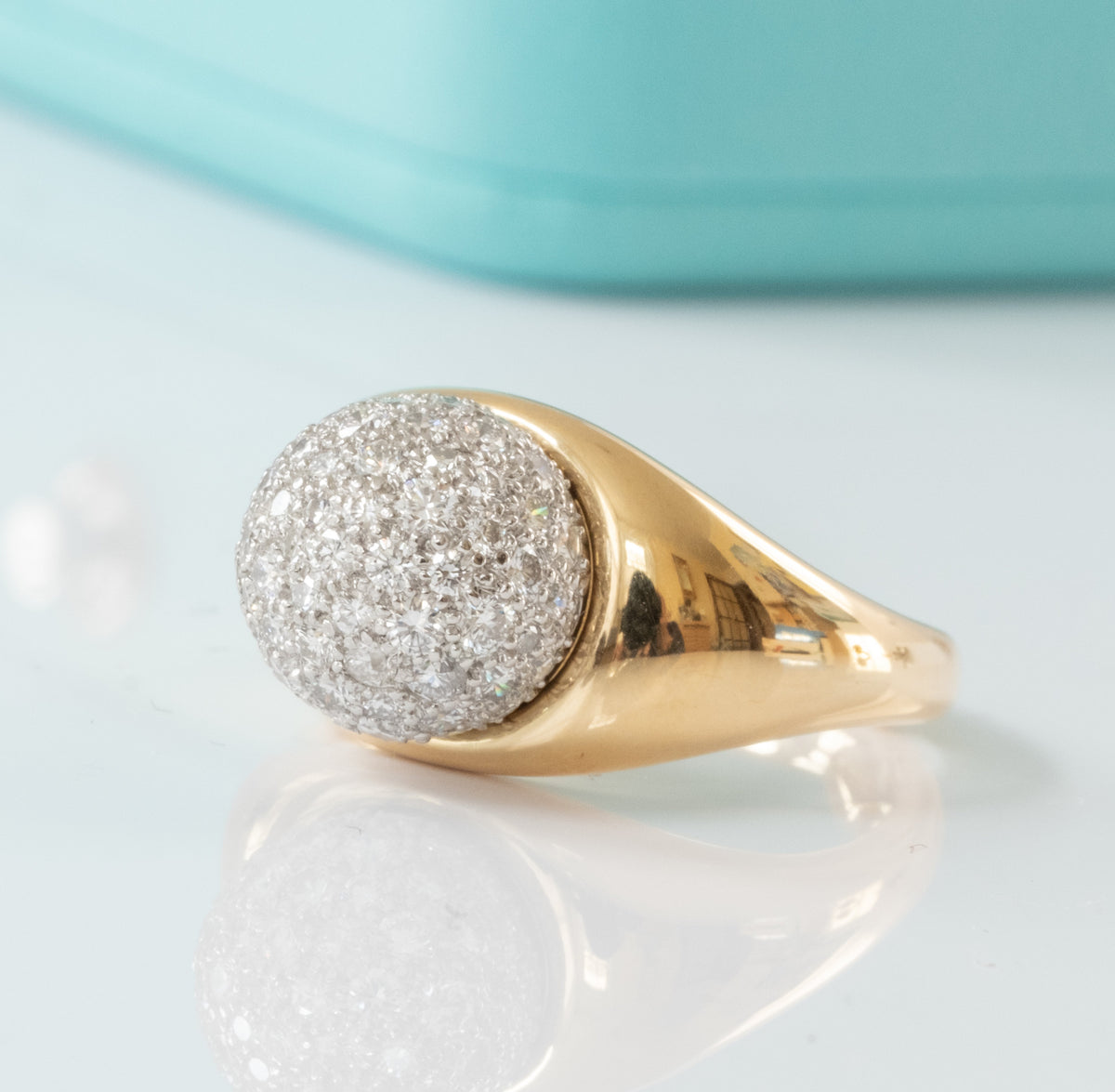
A genuine Tiffany jewel may be expressive, sculptural, or boldly textured, but its construction should remain controlled. Prongs should be purposeful and well finished. Links should move fluidly without feeling loose. A clasp should sit cleanly and function with confidence. On a signed silver design, the metal should have substance and a finish suited to the form rather than a thin, generic appearance.
Repairs complicate this assessment. A vintage ring may have been resized, a clasp replaced, or a pin mechanism serviced during a long life. Such work does not automatically undermine authenticity. It does mean the untouched hallmark must be considered alongside altered areas, and the collector should separate original design from later intervention.
Designer Signatures Require Period Knowledge
Tiffany designer pieces offer another level of identification, though a designer name is not a shortcut around scrutiny. Elsa Peretti, Paloma Picasso, Jean Schlumberger, and Frank Gehry each brought a distinct visual language to Tiffany. Their signatures and associated Tiffany marks should make sense together with the design, material, and production period.
Peretti’s work often depends on sensual line, weight, and proportion. A Bone cuff, Bean form, or sculptural mesh jewel should feel resolved in the hand as well as look right from a distance. Paloma Picasso designs tend toward graphic color, expressive silhouette, and a confident, architectural attitude. Schlumberger’s celebrated creations are marked by inventive settings, richly articulated surfaces, and extraordinary detail. Gehry’s Tiffany designs bring his own folded, undulating approach to precious metal.
The exact wording and format of a designer signature can vary by piece and era. That is why it is risky to authenticate from a single reference photograph. Compare the signature to the complete object. If the stamp says one thing while the design language, craftsmanship, or dimensions say another, trust the discrepancy enough to pause.
Use a Loupe, Then Step Back
A 10x loupe is indispensable for reading a hallmark. Under magnification, inspect whether the letters were cleanly struck or engraved, whether the edges of the impression are consistent, and whether there are suspicious tool marks around the stamp. Fresh disturbance in the metal may suggest a recently applied mark or a removed-and-reworked area.
Then put the loupe down. Overreliance on magnification can obscure the larger question: does this jewel possess the authority of the house? A hallmark is physical evidence, but scale, balance, metal weight, and finishing are often what make a Tiffany jewel immediately persuasive to an experienced eye.
Photographs have limits here. Reflections can flatten an engraving, conceal repairs, or make a soft stamp appear sharper than it is. When evaluating a significant piece remotely, request clear views of every mark, the full reverse, clasp or closure, side profile, and any area where the metal changes color or texture. A complete visual record is far more useful than one dramatic close-up of the name stamp.
When Provenance Changes the Assessment
Original Tiffany presentation can add context, but it is supporting evidence rather than proof. A period box, pouch, receipt, or service record may strengthen the history of a jewel, particularly when the materials, typography, and dates align. None should override an inconsistency in the object itself.
Likewise, the absence of packaging should not diminish a compelling vintage jewel. Exceptional pieces often outlive their original boxes, while boxes and pouches can become separated from the jewels they once held. The object remains primary.
For pieces of meaningful value, especially signed designer work, rare early silver, or intricate gem-set jewels, a professional hands-on review is prudent. Authentication is most persuasive when it rests on converging details: hallmark, metal, design, manufacture, condition, and provenance.
At All The Best Vintage, rare finds are selected with this level of attention because a jewel should reward a closer look. The finest Tiffany pieces do not rely on a name alone. Their hallmarks, craftsmanship, and presence speak in one assured voice.

Commenta
Questo sito è protetto da hCaptcha e applica le Norme sulla privacy e i Termini di servizio di hCaptcha.