
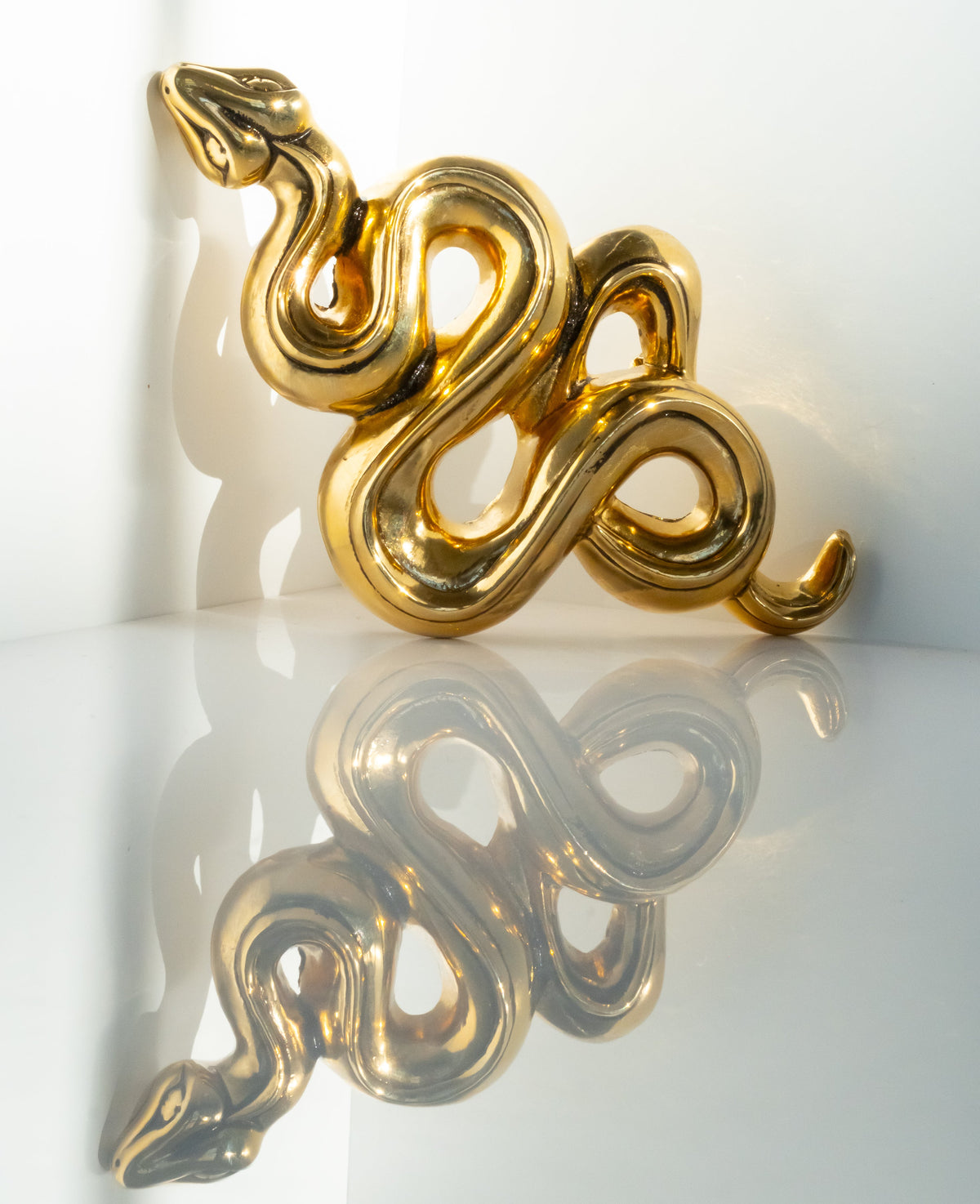
 A remarkable belt buckle changes the entire proportion of a look. Set at the waist, it becomes a focal point with the presence of a brooch and the authority of a piece of sculpture. The finest belt buckles are not incidental accessories. They are wearable objects of design, often made with the same imagination, precious materials, and exacting handwork as the jewels worn above them.
For a collector, a fine buckle has a particular allure: it is unexpected. A signed jewel may be admired in a case, but a buckle enters a room with quiet certainty. It can punctuate a tailored black dress, give an evening suit a more personal point of view, or bring a rare sense of finish to a simple cashmere coat. The right example does not follow a trend. It announces discernment.
Why Fine Belt Buckles Matter
The buckle occupies a rare place in jewelry history. It is functional by necessity, but its decorative potential has invited extraordinary interpretation across centuries. In the 18th century, shoe and knee buckles were often set with paste stones and fashioned in silver. By the late 19th and early 20th centuries, the buckle became a compelling canvas for jewelers working in gold, enamel, diamonds, and carved hardstones.
Its resurgence in the Art Deco period was especially compelling. The clean geometry of the era suited the object perfectly: calibré-cut stones, black enamel, platinum details, and sharply stepped forms could create a compact composition with remarkable visual force. A buckle from this period may read as both jewelry and architecture, particularly when it combines contrasting materials such as onyx and diamond or jade and platinum.
Mid-century examples took a different path. Gold became more sculptural, textured, and dimensional. Buckles could be boldly organic, delicately chased, or rendered as interlocking forms with a confident sense of movement. These pieces are often ideal for women who prefer jewelry with substance and design intelligence over predictable sparkle.
The Difference Between a Buckle and a Jewel
A collector-worthy buckle has to succeed on two levels. It must be mechanically sound enough to perform its purpose, yet visually complete enough to command attention when it is not in use. That dual requirement is precisely what makes exceptional examples so compelling.
The construction reveals much. Fine belt buckles may have carefully engineered tongues, concealed clasps, articulated panels, or separate loops designed to receive leather, fabric, or grosgrain. The reverse should be as thoughtfully resolved as the face. Well-finished backs, substantial fittings, crisp marks, and a satisfying weight all speak to the quality of the original maker.
Material also changes the conversation. A diamond buckle can be brilliant without being overly formal when the stones are arranged in a graphic, low-profile pattern. Sapphire, ruby, and emerald details can provide color with a more editorial effect. Carved jade, coral, mother-of-pearl, rock crystal, and agate give a buckle tactile richness and often make the piece feel distinctly of its period.
Then there is scale. A large buckle can be magnificent, but only if the design has enough restraint to support its size. Smaller examples can be equally arresting when they have a strong silhouette, exceptional stones, or an important signature. It depends on whether the wearer wants the buckle to lead the ensemble or serve as a sophisticated punctuation mark.
Signature and Provenance
Signed belt buckles deserve close attention because they preserve a house style in a concentrated form. The most successful designers understood that a buckle needed a recognizable profile from several feet away. A maker’s signature may appear in a particular treatment of enamel, a distinctive textured gold surface, an elegant animal motif, or an unusually refined combination of stones.
At All The Best Vintage, signed pieces are valued not simply for a name, but for the design vocabulary that name represents. A signature can place a jewel within a larger history of craftsmanship and give the wearer a connection to a distinct creative vision. When the signature is accompanied by original documentation, a notable former collection, or unusually fine condition, the object becomes even more persuasive.
Provenance does not need to be dramatic to matter. An original fitted presentation case, a period sales receipt, a maker’s inventory number, or an identifiable commission detail can add meaningful context. These details help preserve the buckle as a complete historical object rather than a beautiful fragment detached from its story.
Period Style, Worn Personally
The pleasure of vintage belt buckles lies partly in their adaptability. A geometric Art Deco buckle can make a sharply cut white shirt and black trousers feel considered rather than conventional. A richly textured gold example brings warmth to a column gown or silk crepe ensemble. An animal, floral, or foliate design can be wonderfully expressive when balanced by clothes with clean lines.
This is not costume dressing. The most elegant approach is often selective: one important buckle, little competition, and a silhouette that gives the jewel room to register. A buckle can also create an appealing conversation with other jewelry. A pair of sculptural gold earrings may echo a textured gold clasp, while a compact diamond brooch can answer the sparkle of a diamond-set buckle without making the look feel matched.
There is a practical consideration, however. Antique and vintage buckles were made for different belt widths, fabrics, and modes of dressing. Some are best worn with custom leather straps made to suit their fittings. Others are complete two-part buckles that call for a more deliberate waist treatment. This is not a limitation. It is an invitation to make the jewel part of a personal wardrobe rather than treating it as a generic accessory.
Condition Is Part of the Design Story
With a buckle, condition requires a more nuanced reading than it does with a necklace or earrings. It has moving parts and was intended to meet fabric, leather, and the occasional knock of daily wear. Light surface evidence of age may be entirely appropriate, particularly on richly textured gold or older silver settings.
What matters is whether the wear compromises the piece’s integrity. Secure stones, functional fittings, intact enamel, and sound hinges are central to its value and future enjoyment. Alterations can be historically interesting, especially if they reflect an early adaptation by the original owner, but later changes should be considered carefully. A buckle that retains its original proportions, finish, and mechanism will generally carry a stronger collector presence.
The same is true of conversions. A beautiful buckle may inspire thoughts of a brooch or pendant, but its original purpose is part of its distinction. When a jewel has survived decades with its function intact, that survival is worth honoring.
A Small Object With a Strong Point of View
The best belt buckles reward a closer look. They reveal fine engraving, unexpected gemstone choices, subtle asymmetry, and the confidence of a designer who understood how jewelry moves through real life. They also offer something increasingly rare: a way to wear important vintage design without repeating the familiar choices seen at every formal occasion.
Rare Finds Are Our Specialty. For collectors drawn to jewelry with presence, history, and a distinctly personal point of view, a fine buckle is more than a finishing touch. It is the piece that makes the wardrobe unmistakably yours.


Commenta
Questo sito è protetto da hCaptcha e applica le Norme sulla privacy e i Termini di servizio di hCaptcha.