
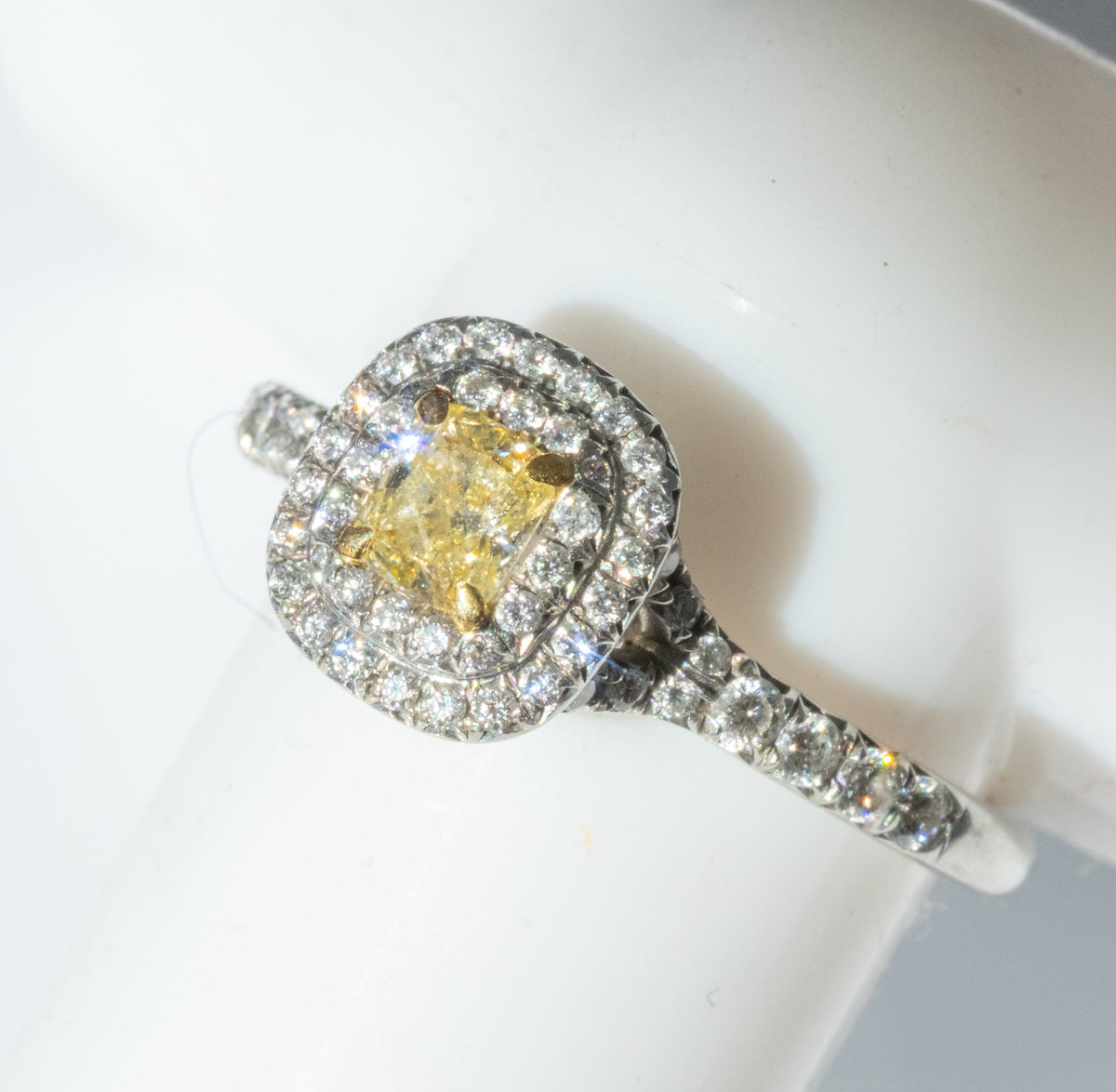
 A canary diamond in a sharply tailored platinum mounting has a different presence than a colorless stone of equal scale. It announces taste before it announces value. That distinction sits at the center of current colored diamond trends: collectors are gravitating toward diamonds with recognizable personality, considered design, and the kind of individuality that cannot be replicated by a standardized assortment.
The strongest movement is not simply toward more color. It is toward nuance. Sophisticated buyers are looking closely at saturation, modifying hues, cut, period, and mounting. They want a jewel that holds its own across a room, but rewards a closer look.
Colored Diamond Trends Favor Distinctive Character
For years, pink diamonds dominated conversations around rare colored stones, particularly after the closure of the Argyle mine heightened awareness of their scarcity. Their appeal remains undeniable, especially in vivid and purplish-pink material. Yet the broader collector market has developed a more individual point of view. A well-chosen fancy yellow, rich cognac, cool gray-blue, or unexpected green diamond can feel more personal than the obvious choice.
Yellow diamonds continue to command attention because they offer remarkable visual impact. The finest examples are not merely bright. They possess an even, clear body color that seems illuminated from within. In vintage and estate jewelry, yellow diamonds can be especially compelling when paired with platinum, high-karat gold, or calibrated white diamonds that make the center stone appear even more saturated.
Brown diamonds, once too casually categorized, are also receiving more serious attention when the color is intentional and beautiful. Cognac, champagne, and warm amber tones can have extraordinary depth, particularly in old cuts whose broad facets create a softer, more painterly display. Their appeal lies in complexity rather than novelty.
The most compelling pieces do not chase a color category for its own sake. They make a case for a particular stone. A slightly warm fancy yellow with a broad cushion shape may be more memorable than a technically stronger diamond whose cut or setting feels generic. Connoisseurship begins with knowing the difference.
Old Cuts Bring a More Personal Kind of Brilliance
One of the most meaningful colored diamond trends is the renewed appreciation for antique and old-cut diamonds. Modern cutting often prioritizes calibrated precision and bright, even scintillation. Earlier cuts can behave differently. They may show larger flashes of light, deeper contrast, and a gentler transition between facets.
In a colored diamond, that character matters. An old mine cut yellow diamond, for example, may reveal warmth and depth that would feel entirely different in a contemporary radiant cut. Neither is inherently superior. The choice depends on whether the desired effect is crisp and graphic or romantic and dimensional.
Antique cuts also resist the sameness that can make a collection feel overly coordinated. Their slightly irregular outlines, high crowns, and distinctive facet patterns give a jewel a lived-in authority. They are often ideal for the woman whose style is composed rather than overly matched: a sculptural ring beside a crisp cuff, a sharp black suit, or a silk dress with nothing competing for attention.
The Setting Is No Longer Secondary
A colored diamond should never be treated as a loose stone that happens to have acquired a mounting. The setting directs the eye, shapes the color experience, and determines whether a jewel feels fleeting or enduring.
Platinum remains a natural choice for cooler hues, including blue, green, and certain gray diamonds. Its restrained color lets a rare stone remain the focus. Yellow gold, meanwhile, can amplify a yellow or brown diamond beautifully, although the effect must be intentional. A warm metal may enrich the stone's apparent color, while a platinum setting can create a cleaner contrast and make a yellow center feel more distinct.
The most collectible designs understand this tension. A halo can intensify the drama of a center stone, but it can also become decorative noise if the proportions are wrong. A simple bezel may feel modern and architectural, yet it can conceal too much of a remarkable diamond. The finest settings strike a precise balance between restraint and presence.
This is why signed jewelry retains such magnetism. Cartier's discipline with line and proportion, Tiffany & Co.'s ability to make classic forms feel assured, and Bulgari's fearless command of color each offer a different visual language. When a colored diamond appears in a well-resolved signed design, the jewel becomes more than a gemstone acquisition. It becomes an expression of a particular house, period, and point of view.
Collector Interest Is Shifting Toward Wearable Rarity
Auction headlines can favor exceptional carat weights and dramatic laboratory descriptions, but the most satisfying private collections are built around jewels that invite wear. A rare stone need not be reserved for a formal evening to feel important. In fact, one of the quieter colored diamond trends is the preference for pieces that can move from a meeting to dinner without losing their distinction.
This does not mean casual jewelry. It means a jewel with enough design intelligence to feel appropriate in real life. A refined yellow diamond ring, a pair of diamond earrings with subtle warm color, or an estate bracelet featuring unusual diamond tones can become signatures rather than occasional spectacles.
The trade-off is worth acknowledging. The highest color grade or largest stone is not always the most wearable choice. A substantial ring may be breathtaking but impractical for someone who works with her hands. A delicate period mounting may require a more thoughtful wearing routine. A discerning collection allows room for both: major pieces for impact and exceptional jewels that become part of a personal uniform.
Provenance and Period Add Another Layer of Value
Color establishes the first impression. Provenance creates the longer conversation. A colored diamond set in a jewel from the Art Deco era carries different appeal from one mounted in the bold, expressive style of the 1960s or 1970s. The stone may be remarkable in either setting, but the historical context changes the piece entirely.
Art Deco jewelry often frames color with geometry, contrast, and precision. Colored diamonds in these designs can appear almost architectural, particularly when paired with onyx, platinum, or calibrated white diamonds. Mid-century and later designs may embrace warmer gold, more sculptural forms, and a freer relationship between stone and setting. These are not interchangeable aesthetics. Each speaks to a different collector instinct.
For serious buyers, condition is part of that story. Originality, well-preserved engraving, thoughtful alterations, and the integrity of the mounting all affect how a vintage colored diamond jewel is perceived. A sympathetic adaptation can make a historic stone more wearable. An overly aggressive remake can erase the very character that made it worthy of attention.
Why the Best Pieces Feel Difficult to Replace
There is no single color destined to define every collection. The wiser approach is to recognize when hue, cut, craftsmanship, and design arrive in unusual alignment. A pale stone with extraordinary life may be more compelling than a deeper one with little vitality. A modestly sized diamond in an exceptional signed mounting may hold more lasting allure than a larger stone presented without imagination.
At All The Best Vintage, rare finds are our specialty because the most memorable jewels are seldom formulaic. They are the pieces that make a collector pause: a color that shifts in changing light, a cut that reveals its age, a setting with unmistakable confidence. The right colored diamond does not follow the trend. It gives the wearer a more distinctive way to outlast it.

Commenta
Questo sito è protetto da hCaptcha e applica le Norme sulla privacy e i Termini di servizio di hCaptcha.